
If the shoe fits, (maybe don’t) wear it
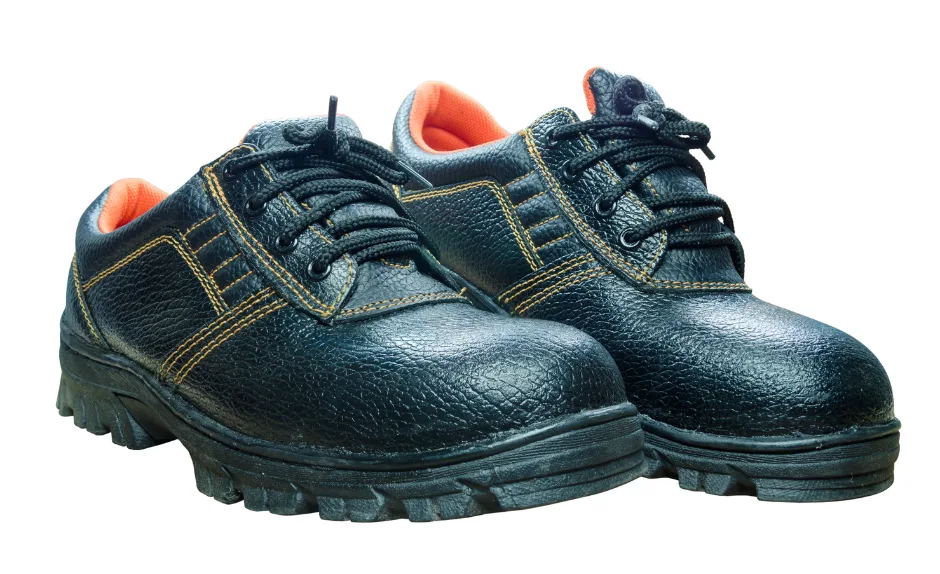
You have carried out your risk assessment, and it shows that your employees must wear safety shoes. You look around, check price/quality, and done – problem solved!
That was how things went 30 years ago. But times have changed, and materials and technologies have improved. Employees’ expectations have also evolved. So how do you now choose the right safety shoe?
Table of contents
What does the law say?
- The Belgian Codex on Well-being at Work states that safety shoes are mandatory when there is a risk of foot injury. The employer must provide them free of charge, maintain and replace them; the employee must wear them.
- The European standard EN ISO 20345:2022 describes the minimum requirements for safety shoes.
- EN ISO 20347 applies to professions that require protection, comfort, and functionality but are not exposed to heavy impact from falling objects.
What does your risk assessment (RA) say?
Your RA highlights the following points:
Risk identification
- Risk of impact (falling/heavy objects).
- Risk of puncture (nails, sharp objects on the ground).
- Risk of slipping, tripping, falling (slippery floors, oil, water).
- Exposure to liquids, chemicals, oils/greases.
- Risk of electricity or static discharge.
- Working in cold, heat, or humid conditions.
- Job-specific risks (healthcare, hospitality, construction, agriculture, etc.).
Required protection type
For safety shoes (EN ISO 20345:2022), since 2022 there is a clear distinction between different puncture-resistance types: P, PL, and PS. These indicate the level of protection a shoe provides against sharp objects:
- P (Perforation protection):
Standard metallic midsole against sharp objects ≥ 4.5 mm diameter.
- PL (Perforation Large):
Non-metallic midsole against sharp objects ≥ 4.5 mm diameter.
- PS (Perforation Small):
Non-metallic midsole against sharp objects ≥ 3 mm diameter.
New protection levels (S6 and S7): designed for long-term water exposure. They provide waterproof protection for at least 80 minutes, intended for tough work conditions such as construction sites or outdoor work in wet environments.
Improved slip-resistance requirements
Another important aspect of the new standard is the improvement of anti-slip requirements. All shoes that comply with the EN ISO 20345:2022 standard must have a slip-resistant sole. Grip is tested on ceramic floors with cleaning agent, and for extra grip there are models with the SR (Slip Resistance) marking. These shoes offer more grip on floors covered with oil or grease, intended for workplaces where slipping is a risk.
- Occupational footwear (EN ISO 20347)
- Possible extra features like:
Slip resistance (SRC), water resistance (WRU), puncture resistance (P), heat resistance (HRO), cold insulation (CI), etc.
- Low-cut or high-cut safety shoes
Usage conditions
- For which tasks/zones are the shoes mandatory?
- Should they be worn continuously or only for specific activities?
As you can see, with all these variables it becomes much harder to select the right shoe.
Consultation and wearing comfort
Choosing safety shoes should not be done alone.
- Involve the Health & Safety Committee or prevention advisor in the choice.
- Pay attention to comfort and fit → poor comfort increases the risk that employees will not wear them consistently.
- Appearance also matters – employees like good-looking shoes.
- Consider shoe weight. The heavier the shoe, the faster fatigue sets in.
What can Prevom do for you?
As prevention specialists, we know exactly how to guide you towards the right choice of safety shoes. We have years of experience supporting companies from small businesses to multinationals.
Our team of experts master the EN ISO 20345:2022 standard. We understand that every company is unique, so we provide tailored solutions adapted to your specific needs.
Feel free to contact with us.
Looking for clarity?
Prevom has the expertise you are looking for.
We will be happy to inform you about the possibilities!