
Que you are telling moi?
Why a language policy in the workplace is not a luxury, but a necessity.
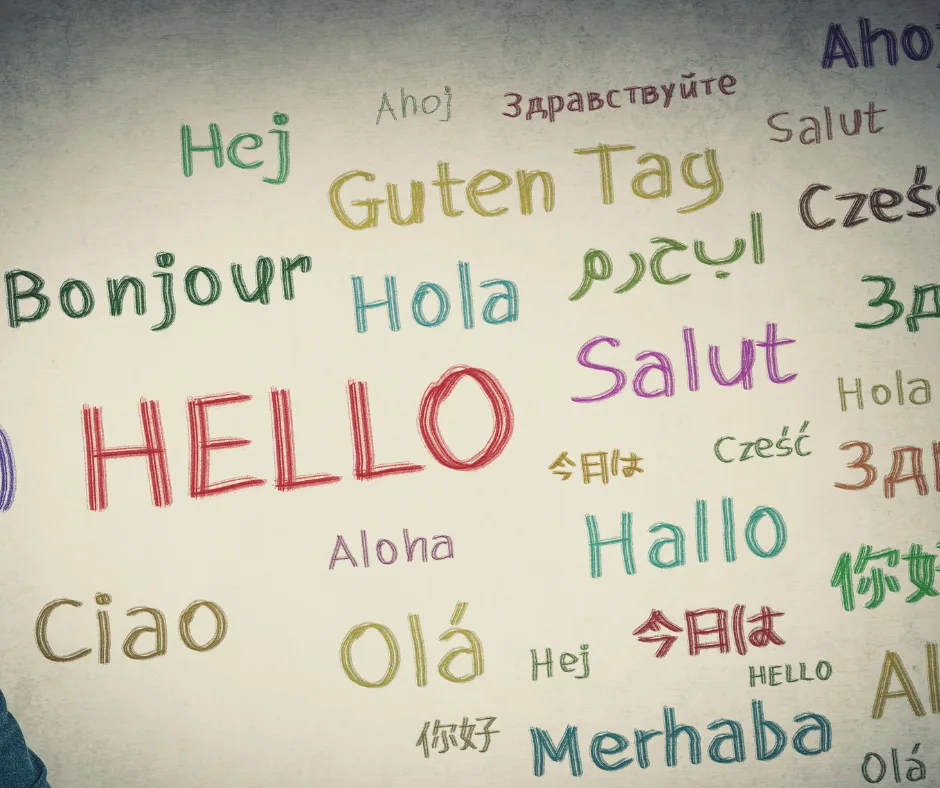
We’ve all experienced it. An employee hears an instruction and looks at you with a puzzled face: “Que you are telling moi?”
What may seem like a funny moment can unfortunately lead to mistakes, frustration, or even dangerous situations. On a multilingual work floor, communication is not self-evident. Yet it is essential — especially when it comes to safety.
Table of contents
Clear communication = a safe workplace
Imagine this: you give instructions on how to safely operate a machine. But the employee does not sufficiently understand the language. The risk of an accident immediately increases — not only for him or her, but also for colleagues nearby.
Language barriers are a real risk, particularly in sectors such as construction, agriculture, and industry, where clear and direct communication is vital.
What does the law say?
The Belgian Well-being Act is clear: as an employer, you are obliged to provide your employees with clear and understandable safety instructions. This means that language must not be an obstacle in communication about safety, use of machinery, or protective equipment. In other words: “I said it” is not enough if your employee did not understand.
Problem or potential?
Multilingualism is not necessarily a problem. On the contrary: in many companies, depending on the sector, it can even be a major advantage, with benefits such as:
- More international opportunities
- Stronger customer relations
- Higher employee satisfaction
- Greater team cohesion
- Stronger intercultural skills
But it remains a balancing act, because multilingualism can also cause:
- Errors or incomplete work (10%)
- Feelings of exclusion (4%)
- Dangerous situations or accidents (1%)
That’s why it is crucial to deal with language consciously in the workplace. And that’s where a language policy comes in.
How to start a language policy?
A good language policy is more than just a translated instruction. It is a deliberate approach that starts with understanding.
Map the language situation with a language environment analysis
- Which languages are spoken at work?
- How many employees have limited knowledge of Dutch?
- Where do misunderstandings arise?
- What are the needs for the future?
Provide clear and multilingual communication
- Use pictograms and visual instructions
- Add translations in languages employees understand (e.g. English, French)
- Use stickers or helmet markings to quickly see who speaks which language
Encourage inclusion and interaction
- Organise language duos: a Dutch-speaking and a non-Dutch-speaking colleague talk one hour per week in Dutch
- Set up conversation tables: Monday English, Tuesday French, Wednesday Dutch
- Allow employees to learn at their own pace via a “language corner” or newsletter tips
Train supervisors in:
- simple, clear language
- avoiding dialect or jargon
- patient, open communication
Create a language-friendly work environment
- Speak in short, understandable sentences
- Show understanding in case of miscommunication
- Avoid jokes or sarcasm that may confuse
- Encourage colleagues to help each other with language issues
Site communication? Make agreements.
In the construction sector, this has even been legally required since the collective labor agreement of September 30, 2019. At least one person must always be present on a construction site who speaks a national language or English. For larger sites, it is even recommended to provide interpreters or multilingual site managers. Also make agreements with external contractors about language use, and consider using stickers or badges per language.
Language policy = future-proof policy
In a globalised world, multilingualism is not a temporary trend, but here to stay. Companies that want to grow are already investing today in the language skills of tomorrow.
A language policy is therefore not a luxury. It is a strategic choice that contributes to safety, productivity, satisfaction — and ultimately, SUCCESS.
Conclusion
Language in the workplace is about more than instructions. It is about understanding, safety, and connection. And that is where Prevom is happy to support you.
Whether you want to start with a language corner, look for on-the-job training, or need help setting up a full language policy: we guide you step by step.
Because only when we understand each other, can we move forward together.
Looking for clarity?
Prevom has the expertise you are looking for.
We will be happy to inform you about the possibilities!